
THE RAPALLO BORDER AT THE JAVORNIKI HILLS AND MT. SNEŽNIK
2.March 2026
THE RAPALLO BORDER AT THE JAVORNIKI HILLS AND MT. SNEŽNIK
The Rapallo Border was the former state border between the Kingdom of Italy and the Kingdom of Serbs, Croats, and Slovenes (Yugoslavia) during the interwar period. The border agreement was concluded between the two countries on 12 November, 1920, in Rapallo, Italy. With this border, Italy acquired more than a third of the Slovene ethnic territory, the cultural centres of Trieste and Gorizia, and approximately 350,000 Slovenes. The latter received no guarantees of national rights in return. The era of the Rapallo border was profoundly marked by Fascism, under which the suppression of Slovene identity became Italy’s official policy. Despite the liberation in 1945, the border was only finally abolished with the Paris Peace Treaty in 1947 between the Allies (Yugoslavia) and Italy.
The border cut deeply into the landscape, the people, and time. It divided once-connected regions, municipalities, and hamlets, severing everyday ties between people. Agriculture remained the predominant way of life—many living along the border had their forests, meadows, or fields on the other side. Dual owners (landowners with property on both sides) required special passes, as did those who went to help farmers. However, crossing was not a given—the border was only finalized and the crossings regulated eight years later. Passage for dual owners was allowed only at specific points and at strictly defined times. The border was more than just a line on a map; it was a barrier that shaped lives. Resonant newspaper headlines about the unjust border were soon replaced by news about the difficult conditions of the border population, who had to adapt quickly to the new circumstances. The new border became a reality. No one dared to think that just twenty-seven years later it would be abolished and subjected to collective oblivion.
OCCUPATION 1918–1921 AND DELIMITATION 1921–1924
At the end of World War I, rapid political and military changes occurred. On 29 October, 1918, the day after the proclamation of Czechoslovakia, the State of Slovenes, Croats, and Serbs was proclaimed in Ljubljana and Zagreb. Shortly thereafter, a National Government was established in Slovenia, taking over authority at all levels. Meanwhile, Italian authority was being established in the Austrian Littoral, following its interests in annexing the territory to Italy.
With the surrender of Austria-Hungary on 3 November, 1918, at Villa Giusti near Padua, Italy forced recognition of its demands from the 1915 London Memorandum. This gave its army the basis to occupy areas where the State of SHS had already taken power. Although Yugoslav representatives expected help from other Allied powers, Italy took control exclusively. The military administration quickly introduced Italian as the official language, carried out requisitions, and suppressed Yugoslav symbols. Reports from occupied towns reveal a uniform tactic by Italian units, who often ignored complaints from the population and human rights violations.
The Italian interpretation of the demarcation line, according to which Italy had no right to occupy the Sava River basin, did not account for the underground watershed. Instead of the line running near Pivka and Razdrto, Italian forces occupied all towns up to the Vrhnika slope (Vrhniški klanec). Thus, Italy occupied all major towns of the Inner Carniola (Notranjska) region: Postojna, Vipava, Idrija, Sv. Peter (Pivka), Ilirska Bistrica, and Logatec. The State of SHS controlled only Cerknica, Lož, and Vrhnika. From the Vrhnika slope or Ljubljanski vrh, the demarcation line ran across the Menišija plateau parallel to the railway line to the occupied Rakek, where it crossed the main road at the eastern edge of the settlement (near today’s gas station) and then turned toward the Javorniki hills. In addition to general post-war shortages, Cerknica had to deal with the loss of the railway, economic decline, and the diversion of the carting trade; therefore, it is not surprising that smuggling flourished as early as 1919. The importance of Rakek is also evidenced by stamps on archival materials, which reveal that Cerknica and Lož, due to being cut off, were losing their former status and were already under Kočevje’s jurisdiction for financial border control and military matters.
The signing of the Treaty of Rapallo on 12 November, 1920, reopened a window to the world for Cerknica, as Logatec, Planina, and Rakek fell to the Kingdom of Serbs, Croats, and Slovenes. After the handover of power in February 1921, Cerknica regained access to the Rakek railway station and a road link to Ljubljana.
At the same time, the demarcation line on Menišija was abolished. The exact course of the border on the Planina–Rakek–Javorniki section was only determined in 1924. The state border was closest to Cerknica at today’s popular walking spot, Stražnik, where sector border stone no. 51 and the Yugoslav border guard station (popularly called grenčerji or graničarji) stood.
BORDER MARKING AND BORDER CROSSINGS
To precisely determine the border on the ground, a mixed border commission was established by the Rapallo Treaty, consisting of three representatives from each country. The Yugoslav delegation was initially led by General Rudolf Maister, later replaced by two officers of Serbian nationality. The commission began its work in 1921 at the Union Hotel in Ljubljana and concluded it in 1926. It was headquartered in Trieste. In addition to the exact course of the border, the commission members also arranged the marking method—choosing a modern approach and building concrete bunkers instead of stone border markers. The exact course of the border had to be confirmed by both sides of the mixed commission. During inspections, they marked the locations of future markers with sticks. The Italian part of the commission also hired civilian labor for construction, while the Yugoslav part generally used only soldiers. Construction was followed by geodetic measurement of the markers, which had to be confirmed by surveyors from both countries.
Once determined, the border was more strictly guarded, and crossings were limited. It was only with international agreements in Nettuno (1925) and Belgrade (1924) that the two countries regulated the rules for crossing the border, defining border crossings, hinterland border zones, and tourist zones. To cross the border, it was necessary to obtain a visa permit, valid only for a specific crossing point. In the mountainous terrain of the Julian Alps, hikers from both countries were allowed to cross, but only with a prior annual permit and membership in a mountaineering organization.
There were several types of border crossings, including local border crossings that allowed local residents access to their property on the other side and movement within the border zone. Nevertheless, the border was often a source of tension, bureaucratic complications, and surveillance. The nearest international road border crossing was in Planina, and the nearest international railway crossing was at Rakek. For residents of border towns, local crossings were available at Planina-Haasberg, Unec I (along the old Unec–Unška koliševka–Rakov Škocjan–Postojna road), Unec II (along the later Unec–Rakov Škocjan road), Otoška dolina, and Leskova dolina. Landowners on both sides were also served by thirty-eight additional 3rd-category border crossings, which were either specific points (at a marker) or sections of the border.
“KONTRABANT” AND SMUGGLING – BETWEEN NECESSITY AND PROFIT
During the interwar period, smuggling along the border was an everyday practice, but it was not understood in a single way. Contraband (kontrabant) was considered an acceptable activity related to poverty and the necessity for survival, while “smuggling” was associated with a desire for quick profit. Contrabanders operated independently and quietly to avoid authorities, whereas smugglers were organized and armed. On the Yugoslav side, major smugglers drove horses and cattle across the border, while most of the population smuggled saccharin (sweetener), coffee, tobacco, rice, flour, and other everyday necessities.
Documents from the Logatec District Office reveal lively activity along the border. Gendarmes in Lož complained about the lack of sugar, even though they had to “lurk for smugglers all night” and deserved at least sweetened tea. Sometimes they improved their situation themselves—by trading with Italians or keeping confiscated goods. Italian soldiers also came to trade flour and rice for eggs and tobacco. Profits were high, but so were the risks. Men driving three cows had their livestock confiscated and sold for almost 3,000 crowns, and they had to pay a 900-crown fine. Half of the proceeds went to the gendarmerie station, sometimes shared with the informant—often a neighbour (Source: Archive of the Republic of Slovenia).
JOSIP KUKEC (1894–1930)
Josip Kukec was a Slovenian patriot and a member of the TIGR organization – a militant anti-fascist organisation established in response to the Fascist policy of forced Italianization (TIGR is an acronym of the place-names Trieste, Istria, Gorizia, and Rijeka). He was born in 1894 in Postojna and died on 2 September, 1930, near Cerknica. He was active in the resistance movement, collecting data on Fascist violence and military facilities, and crossing the border to help fugitives and attack Fascist informants.
On 2 September, 1930, while crossing the Rapallo border at Poljane, he fell into an ambush by a patrol of the Fascist border militia (G. Dus, R. Moise, and G. Caminada). In the armed clash, both Josip Kukec and Romano Moise were killed.
As the Trieste Trials were taking place at the same time (1–5 September), Italian propaganda exploited the border incident as proof of a serious and organized “Slavic terrorist” movement. His death in the clash with the Italian border militia at Poljane near Rakov Škocjan was thus part of the broader repressive response by Italian authorities against TIGR.
THE WESTERN FRONT – THE RUPNIK LINE
Before World War II, the Kingdom of Yugoslavia, in order to counter external military threats, planned fronts along its borders, which included large permanent defensive fortification systems. Along the western border with Italy, the front was named the Western Front; later, along the borders with Germany and Hungary, the Northern Front was organized, followed by other fronts along remaining borders and the sea.
The built part of the fortification system within these fronts in the then Drava Banovina (today’s Slovenia) was never known among the people by the military names Western or Northern Front. Instead, it acquired popular names during construction. In parts of Styria, it was known as the Maister Line, after General Rudolf Maister. However, another more widespread popular name has been preserved to this day—the Rupnik Line. This name was derived from the surname of General Leon Rupnik, the Chief of Staff for Fortification between 1938 and 1941, who regularly monitored the progress of work on the ground and was thus well known among the people.
THE “RUPNIK LINE” FRONT
As early as 1926, Yugoslavia’s ally France suggested protecting the Rapallo border with a fortification system modelled after their future Maginot Line. Yugoslavia only took the first steps in 1935. The Western Front along Italy was initially the only one where the new concept of fortifications based on French and Czechoslovak models was introduced—both countries were to supply Yugoslavia with construction elements and specialized weaponry.
In 1936, construction of access roads began; the construction of fortifications was intended to last until 1947. After Germany annexed Austria in March 1938, it became a direct neighbour of Yugoslavia, which then halted activities on the western border and redirected most resources to the northern border. Due to financing and a lack of building materials, planners abandoned French designs and began building smaller but more numerous structures. Following the German occupation of Czechoslovakia and France in 1939 and 1940, Yugoslavia was left without a supply of construction parts and weapons. It had no choice but to build the simplest structures, bordering on the concept of field fortification.
Although the Cerknica and Lož area was initially categorized as the least important (Sector 5), the wars in Poland and France led to an acceleration of defensive construction here in 1939 and 1940. The most notable feature is a several-kilometre-long anti-tank ditch between Rakek and Cerknica, the only such structure along the Rapallo border.
Rupnik Line structures are divided into two large groups: reinforced field fortifications and permanent fortifications (permanent defensive works), similar to those of the Alpine Wall. The first group consists of structures such as light machine gun nests, which offered minimal protection, and machine gun nests, which achieved Level I protection (against 75 mm artillery shells). The second group of permanent defensive works is further divided by resistance levels. The most numerous are the standard permanent fortification structures, intended to replace the originally planned large and small infantry models. They achieved protection against 150 mm artillery shells and aerial bombs up to 100 kg (Zelenko, 2023).
The fortifications of the Kingdom of Yugoslavia are often labelled as inferior due to a lack of construction expertise or the search for cheaper solutions, but the experiences of other armies are often forgotten. Tests showed that small structures were difficult to hit with indirect artillery fire. In 1931, the Red Army fired 90 shells from 203 mm howitzers at a test target from 3.5 km away without a single hit. Direct artillery bombardment was not foreseen in the rules of any army at the time, and Yugoslav experts relied on the advantages of heavily reinforced field fortifications, where the smallest objects had a surface area of only 5 m², with only 1 m² exposed to the enemy when properly banked with earth.
ITALIAN DESTRUCTION 1941–1943
After the occupation of Yugoslavia, Italy established a special border zone along the Rapallo border and began the systematic demolition of Yugoslav structures. The main reason was to recover iron, as the structures were made of reinforced concrete. They also performed tests on individual structures to check construction quality. Because of this, Rupnik Line structures in the Italian occupation zone are almost entirely destroyed today. In the Cerknica and Loška dolina areas, Italian soldiers systematically demolished nearly all Rupnik Line structures from June 1941 to 1943; only a handful are preserved.
PERMANENT FORTIFICATIONS ALONG THE EASTERN BORDER – THE “ALPINE WALL”
“Alpine Wall” (Vallo Alpino) is the established popular name for the Italian defensive system along the French, Yugoslav, and—after the Anschluss—German borders. Today, its entire length of 1,850 km stretches across four countries. The name was first used on 13 March, 1940, by Undersecretary of the Ministry of War Ubaldo Soddu. To calm the public, worried about the outbreak of war in Europe, the project that had been classified, was presented as a safeguard against a potential joint French-Yugoslav attack. No such attack occurred; Italy declared war on France on 10 June, 1940, and attacked Yugoslavia alongside Germany and Hungary in April 1941.
Unlike the complex French and Czechoslovak permanent works, the Italian ones were designed much more simply, focusing on building positions for existing military units and weaponry. Italian planning was based on experiences from Worl War I, where expensive, modern forts proved ineffective at the start of the conflict. After the defeat at Caporetto, the Italian underground system of machine gun and artillery caverns on the slopes of Monte Grappa held back Austro-Hungarian units and became the basis for interwar fortification.
STARTING IN 1931 OR LATER?
On 6 January, 1931, the Italian General Staff presented Circular No. 200, “Guidelines for the Organization of Permanent Defence in the Mountains,” to the army corps. This did not immediately signal the start of the vast system we know today. Italy did not initially foresee a complex system, but rather guidelines to unify fortifications that had already begun to appear spontaneously. This was followed on 5 March, 1931, by Circular No. 800 regarding the defence of forested areas on the eastern border. The Italian army relied on its good experience with field fortifications from World War I; new permanent works were to be built only at the most important border crossings. These were called “centres of resistance” (centro di resistenza). In the vast forested areas between the Julian Alps and the Adriatic, they used the same architectural solutions but had to pay more attention to controlling roads and large forests. While Circular No. 200 is often linked to the start of the system, it only truly took its final form in 1939/1940.
PLANNING AND CONSTRUCTION
Division commanders and engineers from the Fortification Office surveyed locations to ensure the positions met planning guidelines. Resistance centres had to allow for lateral crossfire and mutual defence while minimizing frontal exposure. This prevented the enemy from using direct fire to damage embrasures while the attacker was shelled by artillery. A similar concept was used in other countries, but always in a continuous line. Infantry shelters were also planned in the immediate rear to help repel attacks.
Detailed construction plans and costs were sent to Rome for approval. Once approved, the army corps contracted a construction company, usually selected via tender based on price. Because of this, local companies from the Julian March often hired cheap labour from southern Italy, and less frequently, local residents, including Slovenes. Construction in the Javorniki hills and Mt. Snežnik area took an average of three years, limited to summer and autumn due to long winters. While excavation and concreting usually went smoothly, complications often arose with the delivery of iron protective elements—I-beams, embrasure plates, and domes. Projects approved in 1931 were often handed over for use only in 1934 or 1935.
The fortifications were not meant to stop an enemy but to slow them down—giving regular Italian army units up to three days to mobilize. Due to the rush to build, many structures were later modified to install equipment such as electrical generators, lighting, and internal plaster to combat humidity.
ARMAMENT AND EQUIPMENT
The standard anti-infantry weapon was the FIAT Revelli 1914 machine gun, used since World War I. The embrasures were adapted for its wide, water-cooled barrel and thus offered no protection against poison gas. In 1935, a new model (1914/1935) was introduced with an air-cooled barrel, larger calibre, and belt-fed ammunition.
Unlike the Rupnik Line, Italian planners placed great emphasis on crew protection. Each structure consisted of combat blocks and a shelter, which served as the logistical hub. It contained three-tier bunks, a command post, ventilation systems, and, in larger objects, a drinking water tank. Manual or electric ventilation provided fresh air and overpressure to keep out poison gas.
Most structures included toilets. Waste and drainage water were piped to the nearest sinkhole or slope. Larger forts had generators and electric lighting, though fuel tanks only lasted for 72 hours—the expected “lifespan” of the fort in wartime. Oil lamps were used during peacetime.
DESTRUCTION 1944–1948, 1953, AND LATER
After Italy’s capitulation in September 1943, the Germans surveyed the Alpine Wall for their own defensive lines but preventively disabled certain objects. Most were thoroughly looted immediately after the war. Organized destruction was later carried out by the Yugoslav People’s Army during the Paris Peace Conference and the first Trieste Crisis. The largest wave of destruction occurred in the autumn of 1953 during the second Trieste Crisis, when most above-ground combat parts at the Postojna Gate, Javorniki hills, and Mt. Snežnik were destroyed. In subsequent decades, locals scavenged the interiors for iron. Many structures also show traces of the destruction of unexploded ordnance.
SLIVICE AND MALNI – UNEC (UNŠKA KOLIŠEVKA)
The defensive works of the Malni–Unec and Slivice groups are the only Alpine Wall resistance centres in the Cerknica municipality. All belong to the defence of the Postojna Gate. Construction was approved in the summer of 1931, and excavation of tunnels for centres 176–177–178 began that autumn. Archives show that construction outpaced the development of terminology and design—single machine gun domes were only introduced in 1932. Originally, the centres were designed to be independent, with emergency exits serving as the only entrances.
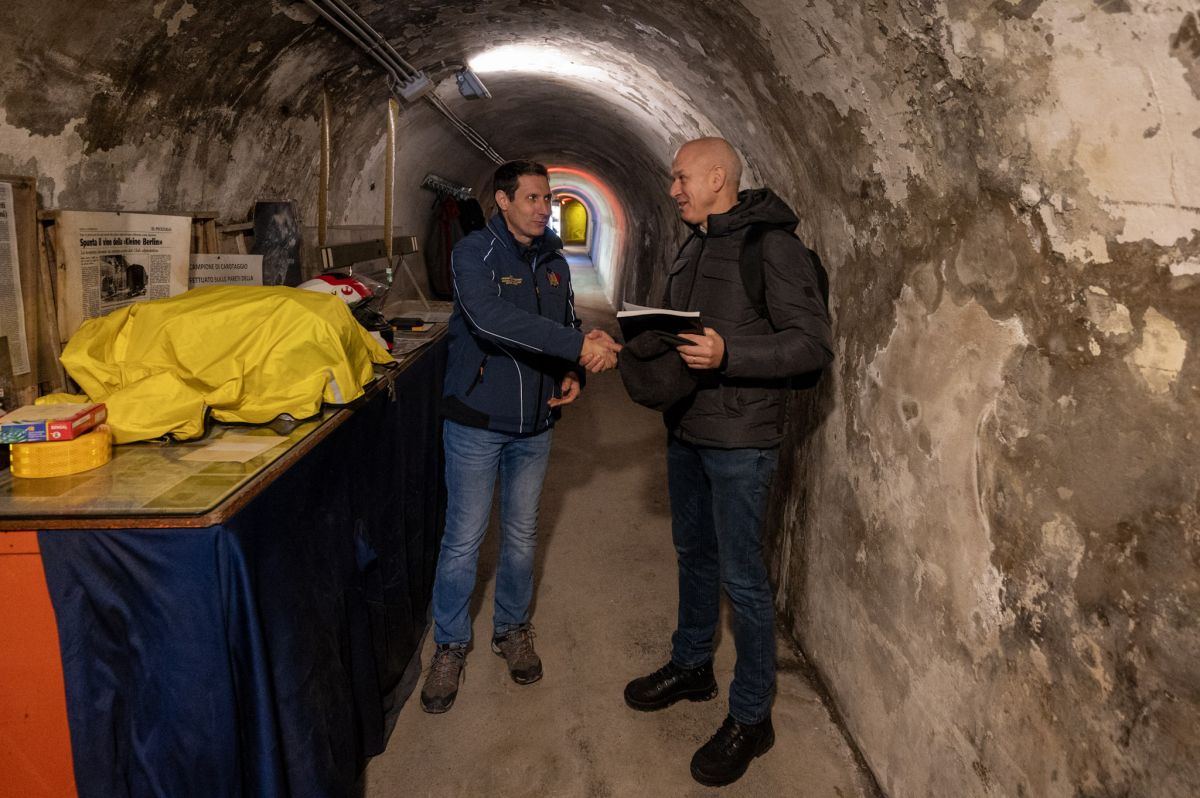
Similar changes occurred in the planning of the “groups of resistance centres” (Malni and Unec) at Unška koliševka. Because other excavations were finished early, surplus funds in 1934 were used to build a unique connecting tunnel. It was only completed after additional funds were received—frugality is the reason the tunnel was left in its raw stone state. It was later used to electrify both forts. Even without the connecting tunnel, both parts of Unška koliševka are among the largest Alpine Wall structures in the country.